

#75 — Demons Are Liars: Why We Don’t Build Doctrine From Deliverance Sessions
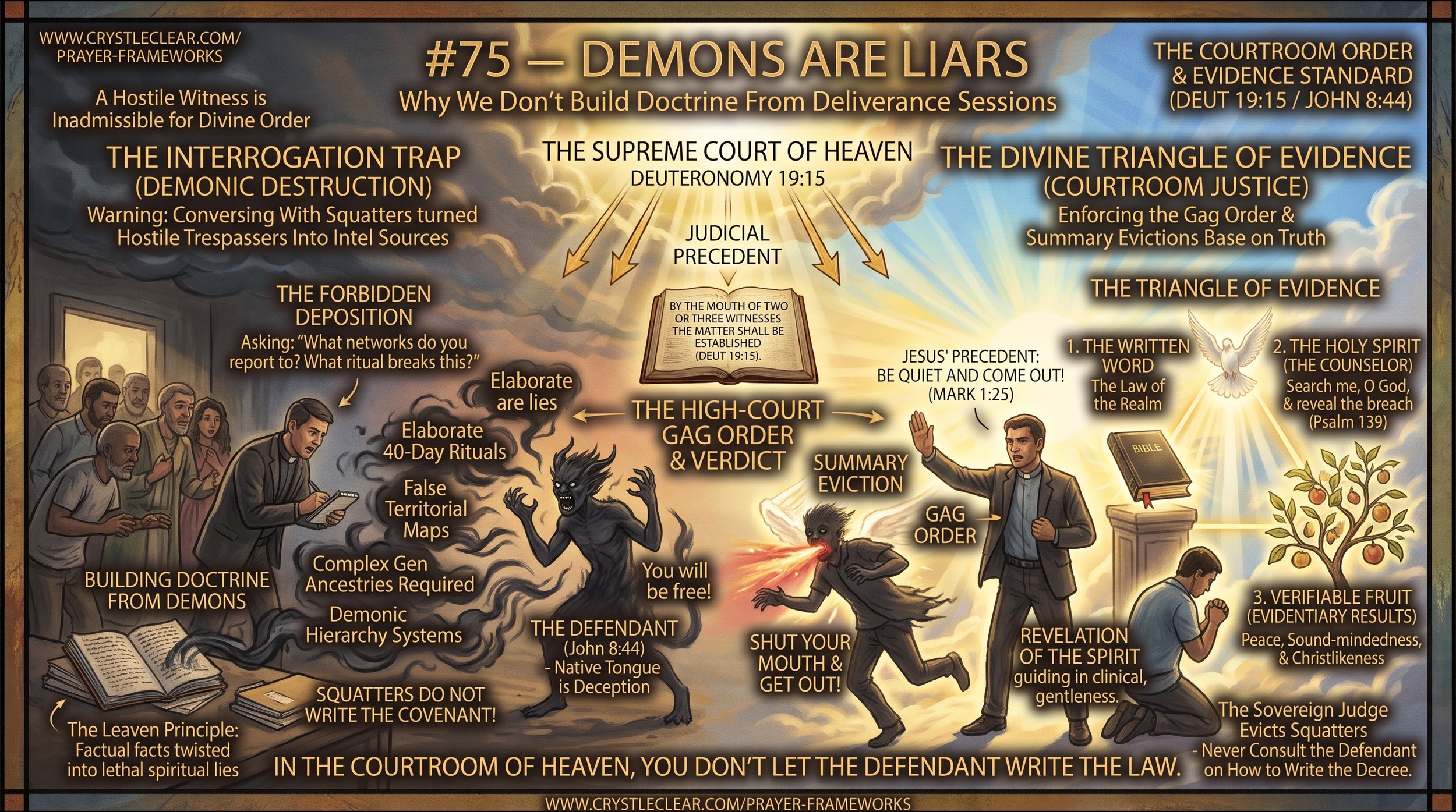
While each article in this series functions as a standalone strategic briefing, the spiritual mechanics unpacked here operate on a progressive judicial order. To fully master the spiritual courtroom physics, legal definitions, and jurisdictional precedents that protect your life and bloodline, it is highly recommended to review these files in their original sequence, starting with Blog 1.Let’s establish an unbending baseline before we examine the courtroom data: If the Bible is true, then it MUST explain everything. It cannot be a textbook that beautifully unlocks half of reality while leaving the rest to guesswork, mystery, or theological blanks. A complete, divinely authored legal code does not leave gaps for the enemy to exploit. If scripture is the ultimate authority, it holds the complete systemic keys to mapping the unseen realm, explaining every anomaly, and establishing every jurisdictional rule of engagement without contradiction.The Interrogation Trap: Hollywood Theology vs. Kingdom Law
In deliverance ministry, a distinct difference exists between commanding a hostile squatter to disclose its immediate breach and holding an unauthorized deposition.
Under the crushing authority of the Name of Jesus, a minister or believer can legally compel a manifestation to answer a targeted question: "What is your legal right?" or "What door did you enter through?"
Just as Jesus demanded the unclean spirit identify its presence in Mark 5:9 ("What is your name?"), High-Court jurisprudence allows an officer of the court to issue a tactical subpoena. The squatter is bound by the Court to confess the narrow factual ground it is hiding behind—whether an unaddressed trauma, an ancestral lodge, or an active offense of unforgiveness.
Where the process turns dangerous and unbiblical is when the questioning goes beyond that single point of entry.
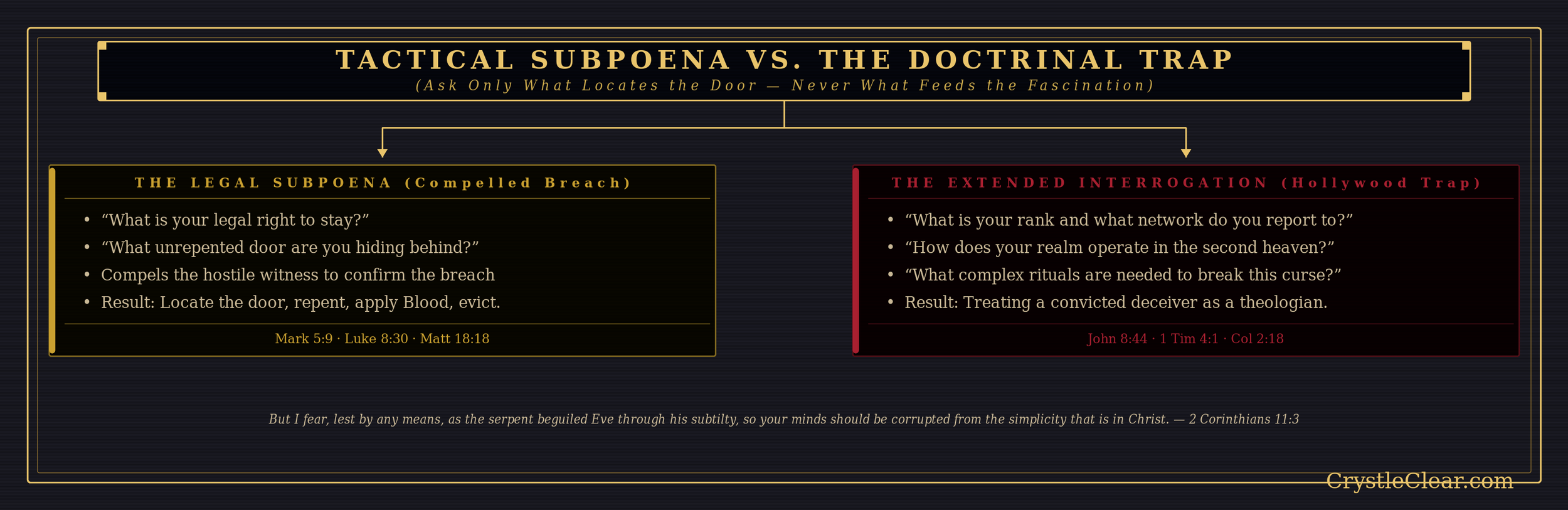
The slippery slope begins when the session transforms into an interview:
"What network or principality do you report to?"
"What cosmic rules govern your assignment?"
"What ritual must be done over forty days to break this?"
"Tell us about the structure of the spirit realm."
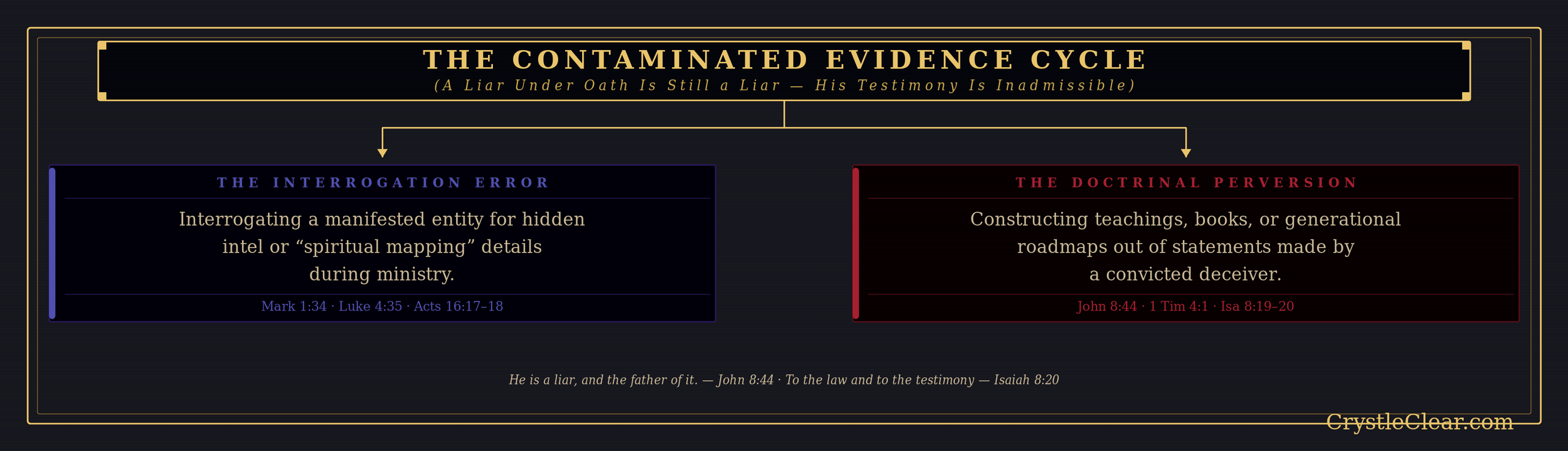
The entity screams an answer, and the room treats that utterance as divine revelation. Entire books have been written, elaborate territorial maps drafted, and bizarre deliverance rituals constructed—all built on transcripts recorded while conversing with demons.
From a High-Court perspective, this practice compromises spiritual security. Once you move past identifying the legal foothold and begin conversing with the squatter, you turn a hostile trespasser into your spiritual intelligence agency. You are inviting an entity whose native tongue is deception (John 8:44) to instruct you on spiritual architecture.
The High-Court Order: Compel the squatter to identify the breach if necessary, close the door immediately through repentance and the Blood, order its mouth shut, and execute the eviction. Never invite the defendant to become your teacher.
The Jurisdictional Baseline: John 8:44 & Perjury by Nature
To understand why demonic conversation must be silenced rather than studied, look at Christ's forensic analysis of the adversary in John 8:44:
"When he speaks a lie, he speaks from his own resources, for he is a liar and the father of it."
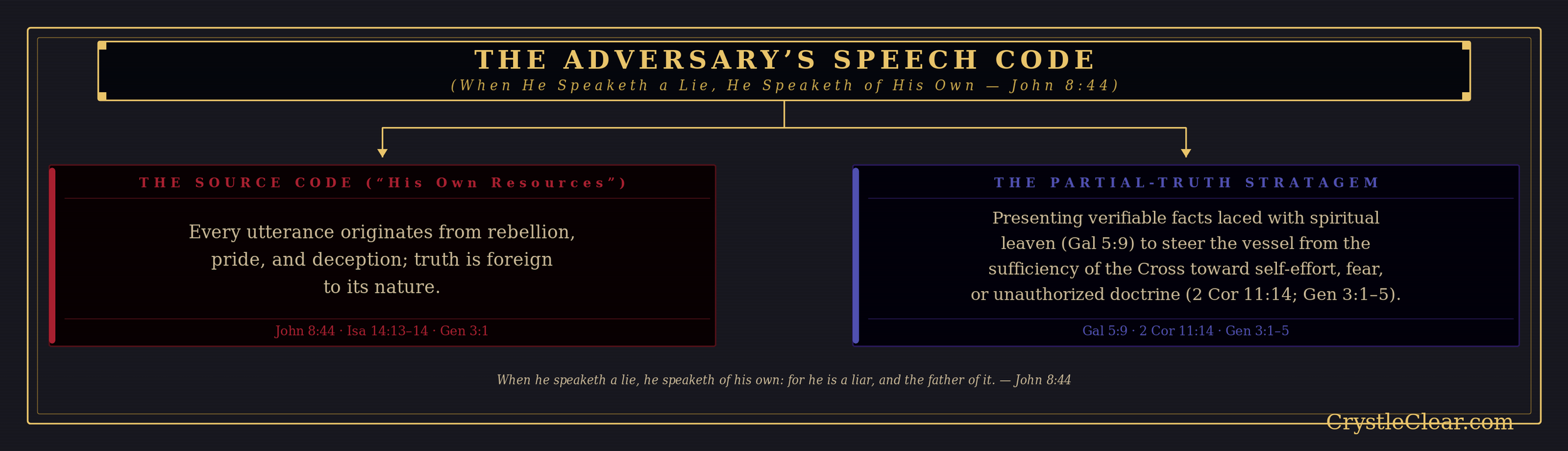
Notice the judicial indictment: deception is not merely an occasional behavior of darkness; it is its native operating system.
The Partial-Truth Maneuver
A demon will readily speak verifiable facts to gain trust:
It might correctly name a hidden childhood event.
It might accurately list an ancestor's secret practice.
It might disclose a legitimate emotional wound.
However, revealing a hidden fact is not the same as speaking truth. The entity shares a factual data point only to anchor a lethal theological conclusion: "Because this was done to you, you can never be free," or "Because of this bloodline ritual, you need an elaborate, three-month ritual to break it."
When an unclean spirit provides information, it does so solely to manipulate the room, draw attention to itself, and stall its eviction.
Nuance the Practice of Demonic Interrogation
Rather than declaring, "If a demon speaks, every single syllable is automatically an upside-down lie," define the difference between compelled testimony and building doctrine:
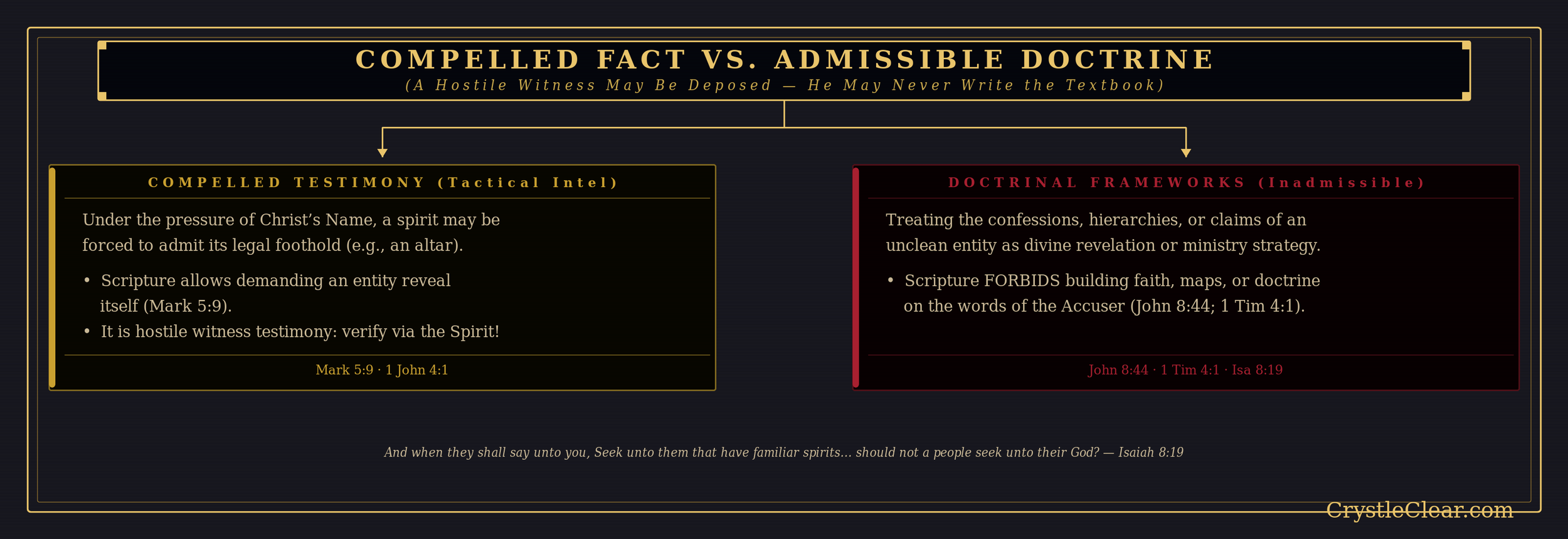
The Hostile Witness: Compelled Facts vs. Inadmissible Doctrine
Many seasoned deliverance ministers will note: "When I demand that a spirit reveal its entry point in the name of Jesus, it usually confesses the exact truth—a specific abortion, an unaddressed rape, an ancestral lodge, or an open door."
In courtroom physics, this is known as compelled testimony from a hostile witness. Under the crushing weight of the Name of Jesus and the Blood of the Lamb, a squatter can indeed be legally forced to admit the specific deed or docket it has been hiding behind—just as the spirits in Mark 5:9 were compelled by Christ to state, "My name is Legion, for we are many."
But here is where the Church veers off the tracks into deception:
Compelled Testimony Is Not Divine Revelation: A criminal admitting on the stand that they broke in through the kitchen window is useful tactical information to confirm the breach. But you do not invite that criminal off the stand to write your home-security manual or teach your family property ethics.
The Danger of Extended Interrogation: When ministers begin interviewing spirits beyond simple eviction commands—asking them how their demonic realm is structured, what cosmic entities rule specific stars, or what elaborate multi-step rituals are required to evict them—they violate 1 Timothy 4:1 ("giving heed to deceiving spirits and doctrines of demons").
The Leaven Principle: A spirit will happily tell you the absolute truth about a past trauma or an open door if it knows that by doing so, it can lure you into an hour-long theological discussion where it plants a single seed of lethal deception: making the deliverance dependent on demonic cooperation rather than the absolute sufficiency of the Cross.
The High-Court Rule: If the Holy Spirit compels an entity to name its legal hold, acknowledge the breach, repent before the Judge, apply the Blood, and shut its mouth. Never let the defendant become your teacher.
Rules of Heavenly Evidence: Deuteronomy 19:15
In divine jurisprudence, establishing an operational reality requires verified, holy testimony. The standard of evidence established in Deuteronomy 19:15 governs all divine proceedings:
"One witness shall not rise against a man concerning any iniquity or any sin... by the mouth of two or three witnesses the matter shall be established."
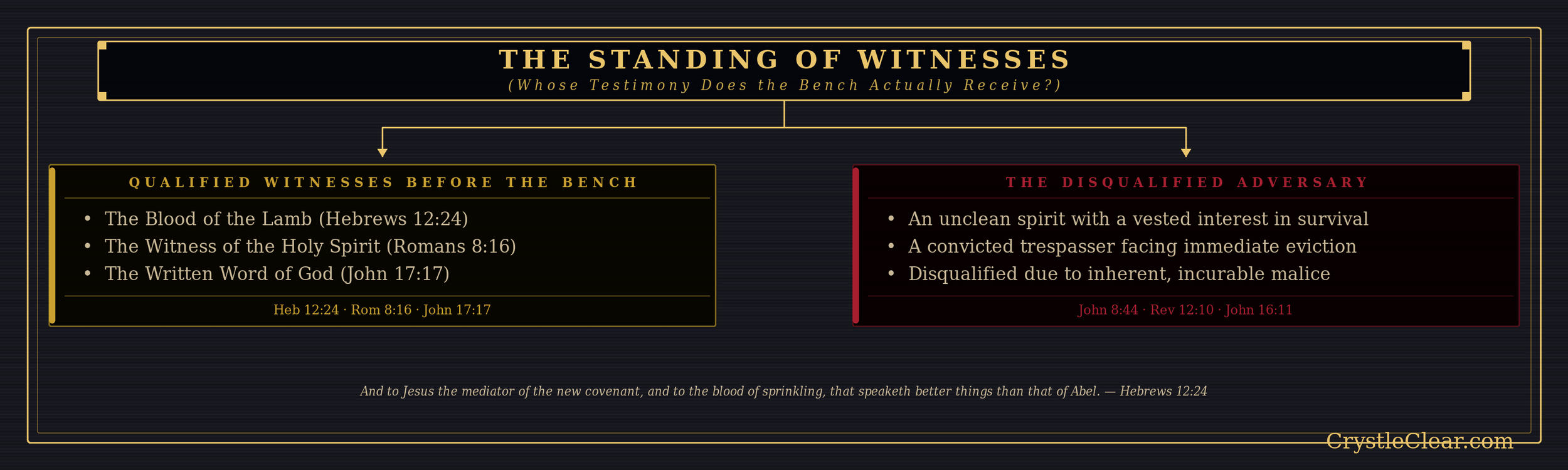
In any civil or criminal court on earth, a trespassing squatter caught in the act of vandalism cannot serve as an expert witness on the building's structural deed. Their testimony is compromised by criminal self-interest and malicious intent.
Yet, believers routinely treat spiritual squatters as reliable witnesses.
Christ’s Judicial Precedent: The Gag Order
Examine how Jesus handled demonic manifestations:
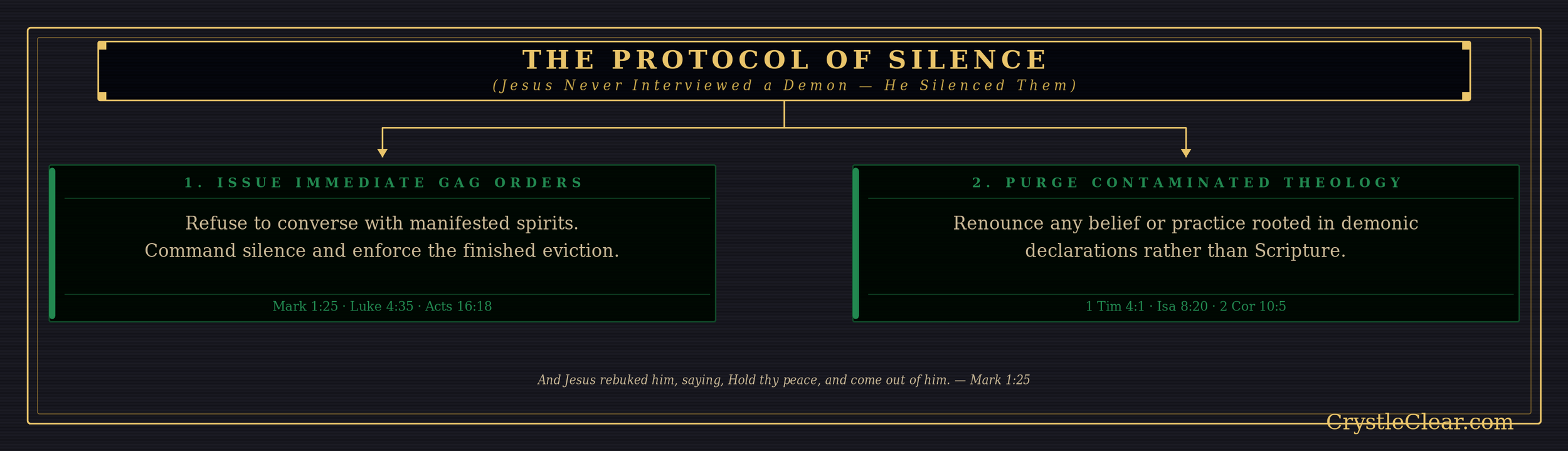
In Mark 1:25, when a spirit declared His identity, Jesus did not engage in dialogue. Scripture records: "Be quiet, and come out of him!"
In Luke 4:41, demons cried out, and Christ "rebuked them and did not allow them to speak."
In Acts 16:16–18, when a girl with a spirit of divination spoke accurate facts about Paul and Silas for days, Paul did not interview her; he was grieved by the source and commanded the entity to come out.
Jesus and the apostles never interviewed demons to build ministry models. They issued gag orders and executed summary evictions.
The Core Jurisprudential Rule
This brings us to a foundational axiom for High-Court governance:
"In the Courtroom of Heaven, you don't let the defendant write the law."
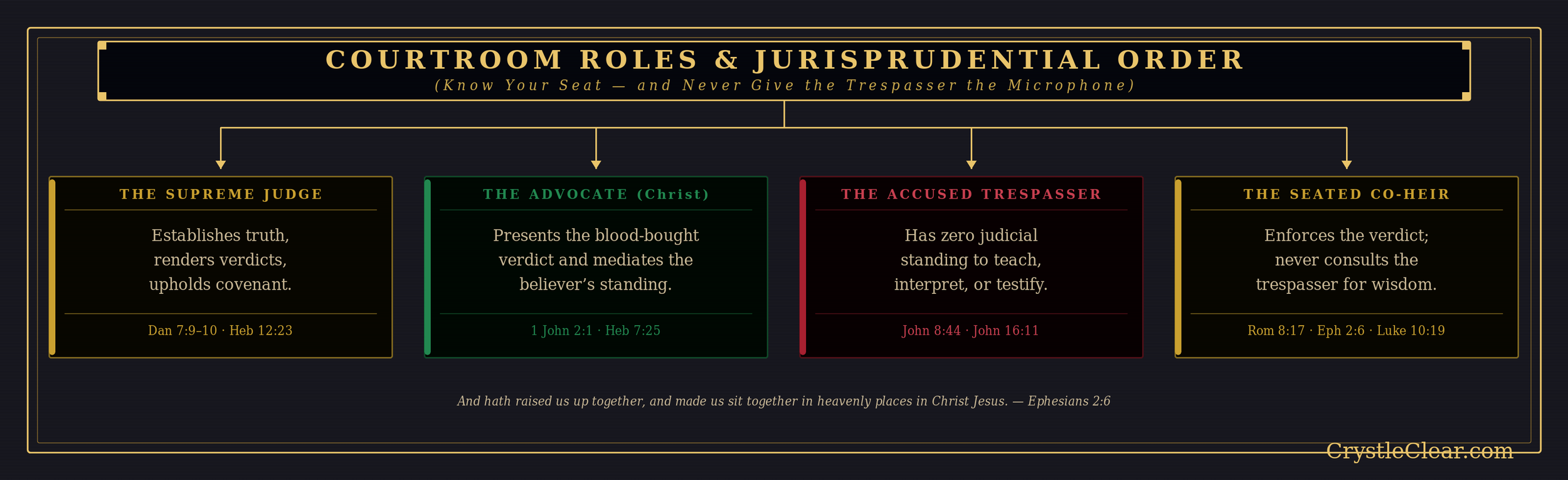
Allowing a demonic entity to instruct you on generational dynamics, spiritual realms, or legal dockets places the criminal on the bench.
The squatter does not determine the conditions of their eviction.
The thief does not define property law.
The accused entity does not provide the theological framework for your freedom.
When an eviction notice is executed, the officer of the court does not consult the squatter on how to write the decree. The decree comes down from the Judge, is sealed by the Advocate's sacrifice, and is executed without dialogue.
The Divine Triangle of Evidence: Where Truth Originates
If we do not consult the enemy to understand open doors and spiritual roots, where does authentic legal intelligence come from?
Heavenly intelligence flows through a closed, uncorrupted Triangle of Evidence:
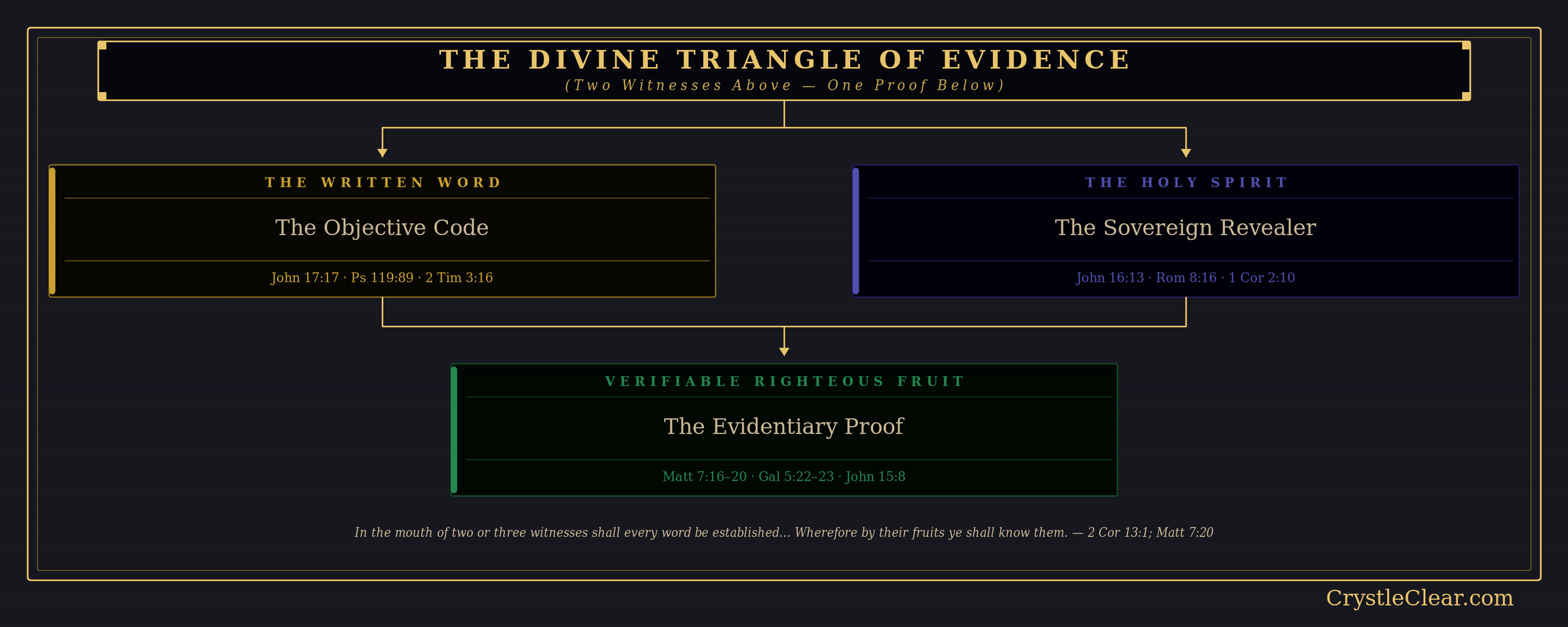
1. The Written Word (The Law of the Realm)
Every legal right, boundary, and authority model is already codified in Scripture. If an idea cannot be proven through the clear, contextual canon of God's Word, it is inadmissible—regardless of how dramatic the spiritual experience was.
2. The Direct Revelation of the Holy Spirit (The Counselor)
When an open door exists, you do not ask the demon to explain it; you ask the Spirit of Truth (John 16:13).
"Holy Spirit, what root is feeding this battle?"
"Father, what generational pattern or personal agreement needs repentance?"
The Holy Spirit reveals hidden things with clinical gentleness, unmixed with fear, sensationalism, or demonic boasting.
3. Verifiable Spiritual Fruit (Evidentiary Results)
Jesus stated that trees are recognized by their fruit (Matthew 7:16). True deliverance produces lasting peace, sound-mindedness, self-control, and Christlikeness—not perpetual paranoia, endless generational digging, or obsession with demonic names and ranks.
Operational Action: Restoring Courtroom Order
To ensure your ministry, prayer life, and theology remain entirely uncorrupted:
Decree of Courtroom Order:
"Supreme Judge of Heaven and Earth, I stand in Your Court under the covering of the Blood of Jesus.
I renounce every instance where I listened to, relied upon, or gave weight to the voices and confessions of unclean spirits. I break alignment with any false doctrine, fear-based theology, or spiritual mapping born from demonic interrogation.
I declare that the defendant does not write the law in my life! I receive my intel solely from Your Word and the Holy Spirit. To every squatting entity: You are silenced by the authority of Jesus Christ. You have no voice, no podium, and no standing before this Bench. Vacate quietly, completely, and permanently in Jesus' name, Amen."
Keywords: Demons Are Liars John 8:44 Deuteronomy 19:15 Deliverance Doctrine Demonic Interrogation Courtroom of Heaven Rules of Evidence Defendant Writing the Law Spiritual Jurisprudence Holy Spirit Intel CrystleClear
#Deliverance #TruthOverDeception #John844 #Deuteronomy1915 #HighCourtWarfare #KingdomMechanics #CourtsOfHeaven #CrystleClear #SpiritualJurisprudence #NoDemonicIntel #BiblicalDiscernment #TheWordAlone
Questions & Topics Answered in This Post
Is it ever biblical to interrogate a demon during deliverance?
Scripture records Jesus asking for a name in the singular, extreme case of Legion (revealing the vast military-like squatter presence), but He never held theological interviews, inquired about systemic generational mechanics, or permitted spirits to speak freely. In Luke 4:41 and Mark 1:25, Jesus explicitly commanded spirits to be quiet and evicted them immediately.
Why do demons sometimes tell the truth about hidden things?
Demons may reveal accurate, hidden factual details (such as a secret wound or ancestral practice) to build credibility. Once credibility is established, they inject toxic theological lies, leading the individual into self-reliance, fear, complex unbiblical rituals, or the conviction that their freedom is impossible.
What is the harm in asking an entity what open door allowed it in?
The primary danger is that you are asking the father of lies for spiritual diagnosis. Doing so bypasses the Holy Spirit, who is designated as the Counselor and Spirit of Truth (John 16:13). Asking the enemy for diagnostic intel gives the squatter a voice and often leads to confusion, false guilt, and inaccurate assignments.
How should a believer find out what open doors need closing?
Rather than speaking to the manifestation, the believer goes directly to God in prayer: "Search me, O God, and know my heart... see if there be any wicked way in me" (Psalm 139:23–24). The Holy Spirit will faithfully bring the specific unrepented sin, unforgiveness, or covenant agreement to light through convicting, peaceful clarity.
How do we identify if a deliverance doctrine is unbiblical?
Any teaching that requires endless, complex rituals not found in the New Testament, elevates demonic rank over the simple power of the Cross, creates perpetual paranoia, or claims authority based on "what a demon confessed during deliverance" is compromised and should be rejected.