

#72 — The Perverse Filter: Projection, Internal Optics, and the Spiritual Physics of Personal Boundaries
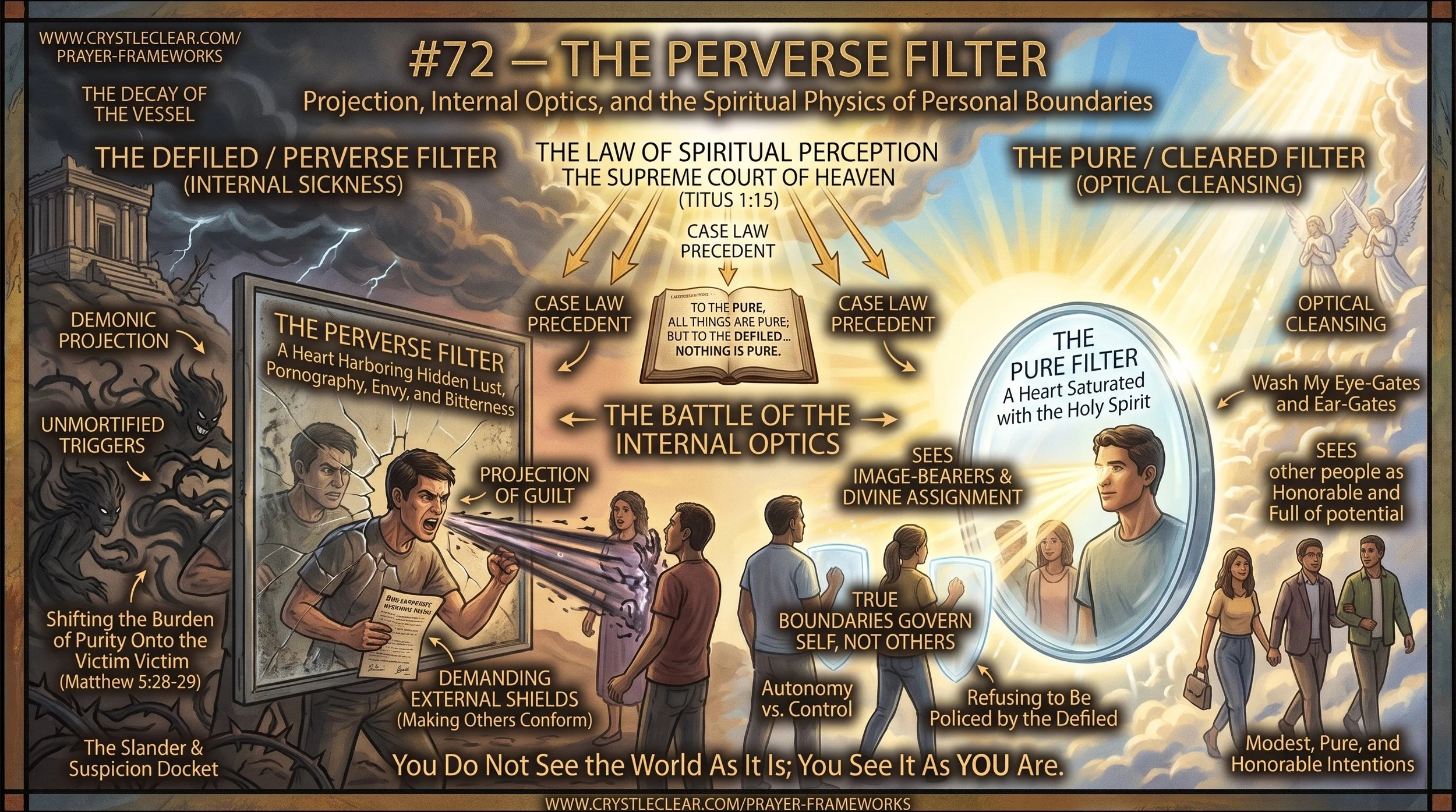
While each article in this series functions as a standalone strategic briefing, the spiritual mechanics unpacked here operate on a progressive judicial order. To fully master the spiritual courtroom physics, legal definitions, and jurisdictional precedents that protect your life and bloodline, it is highly recommended to review these files in their original sequence, starting with Blog 1.Let’s establish an unbending baseline before we examine the courtroom data: If the Bible is true, then it MUST explain everything. It cannot be a textbook that beautifully unlocks half of reality while leaving the rest to guesswork, mystery, or theological blanks. A complete, divinely authored legal code does not leave gaps for the enemy to exploit. If scripture is the ultimate authority, it holds the complete systemic keys to mapping the unseen realm, explaining every anomaly, and establishing every jurisdictional rule of engagement without contradiction.The Law of Spiritual Perception: Titus 1:15 Unpacked
In modern Christian culture, when a person feels tempted, offended, or sexually triggered by another individual, the default reaction is almost always to blame the external trigger: "They dressed wrong," "They spoke wrong," or "They put a stumbling block in my path."
While scripture strictly forbids deliberate seduction and malicious stumbling blocks, High-Court jurisprudence addresses the primary root cause first: the state of the eye viewing the situation.
In Titus 1:15, the Apostle Paul lays down an absolute, unyielding law of spiritual optics:
"To the pure, all things are pure; but to those who are defiled and unbelieving, nothing is pure; but even their mind and conscience are defiled."
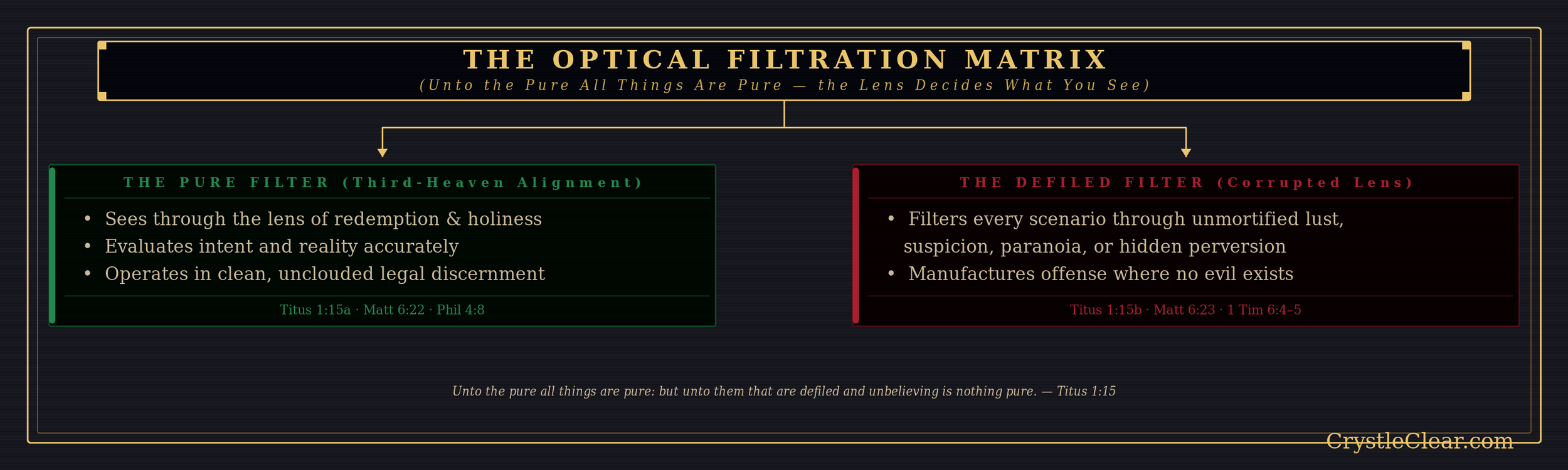
This is not abstract philosophy; it is a law of spiritual physics. You do not see the world as it is; you see the world as YOU are.
A heart saturated with the Holy Spirit can walk through a dark world and see image-bearers, potential for redemption, and divine assignment. A heart harboring hidden lust, pornography, envy, or bitterness will look at a completely innocent interaction and instantly project its own internal filth onto the screen.
The Mechanics of Demonic Projection
What actually occurs when a defiled vessel encounters an innocent situation?
Psychological projection is well understood, but in spiritual jurisprudence, it is a demonic defense mechanism.
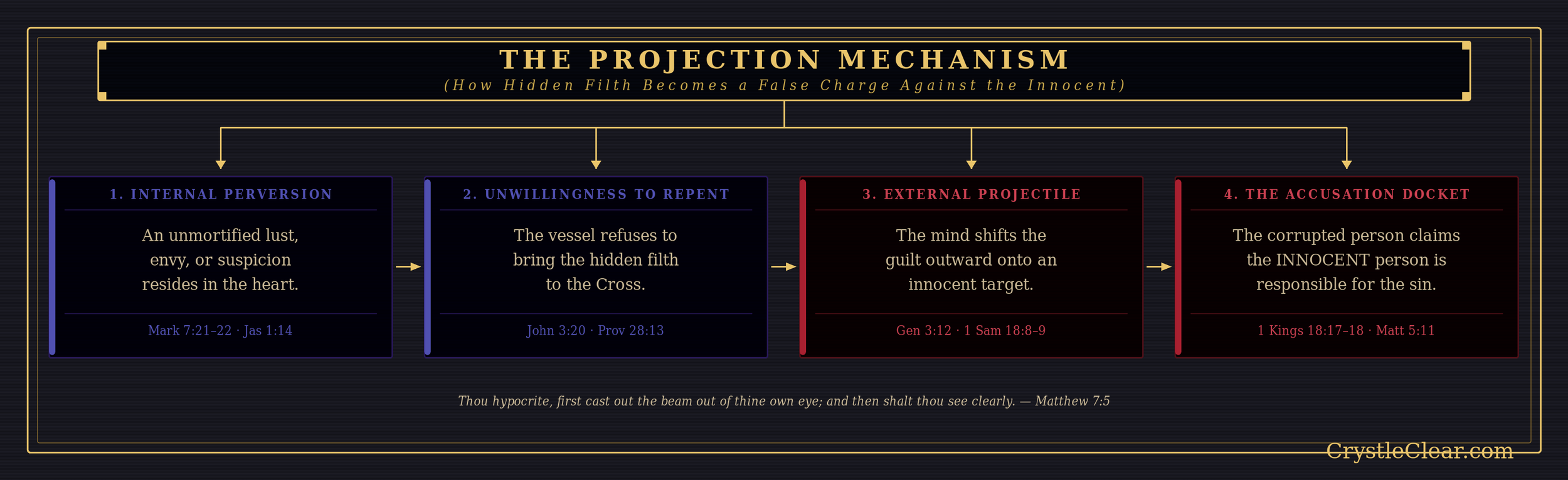
When an individual harbors secret perversion or unmortified sexual triggers, the conviction of the Holy Spirit causes severe internal friction. Rather than yielding to that conviction, repenting, and mortifying the flesh, the corrupted mind executes a spiritual dodge: it projects its internal perversion onto the target.
Real-World Examples in Spiritual Communities:
The Hyper-Sexualized Lens: A leader harboring secret lust looks at a sister in Christ wearing modest, normative attire and accuses her of "wearing a spirit of seduction." The seduction is not on her body; it is operating inside his uncircumcised eye.
The Paranoid Control Lens: A believer operating in a spirit of rebellion looks at healthy, biblical boundary enforcement from a pastor and accuses them of "witchcraft and manipulation." The manipulation is operating in their own rebellious heart.
The Cynical Accuser Lens: A bitter individual looks at a brother giving a generous, joyful financial gift and accuses them of "seeking glory and pride." The pride and envy belong entirely to the accuser.
Before Heaven's Bench, the projection does not alter the innocence of the target—it merely signs a confession of guilt for the accuser!
Deconstructing the "Pearls and Braids" Misunderstanding
A primary scripture cited by legalistic environments to justify hyper-policing women’s appearance is Paul’s instruction in 1 Timothy 2:9–10 (and Peter’s parallel in 1 Peter 3:3–4):
"In like manner also, that the women adorn themselves in modest apparel, with propriety and moderation, not with braided hair or gold or pearls or costly clothing, but, which is proper for women professing godliness, with good works." (1 Timothy 2:9–10)
Legalistic systems read this through a surface-level, hyper-literal lens to enforce external dress codes, claims of "stumbling blocks," and physical suppression. However, when evaluated in its historical and High-Court legal context, this passage exposes the exact opposite principle.

1. Sinful Ostentation vs. Sexual Seduction
In first-century Ephesus, braided hair interwoven with gold coins, rare pearls, and extravagant silk robes were not signs of sexual seduction; they were socio-economic flexes. Elite women used their attire as a public display of wealth and social status, effectively turning the church gathering into a fashion show that shamed and excluded poorer believers who could barely afford basic garments.
Paul’s mandate was a correction of arrogance, classism, and ostentatious distraction, enforcing that the assembly of God is an equal-ground courtroom where worth is measured by good works and a quiet, humble spirit—not financial flexing.
2. The Legal Error of Making the External the Sovereign Standard
When religious systems weaponize 1 Timothy 2 or 1 Peter 3 to enforce rigid external dress codes as a guarantee of purity, they commit a fundamental legal error: they substitute external regulation for internal transformation.
External Dress Codes Cannot Cure a Perverse Eye: A defiled heart operating under a corrupt filter (Titus 1:15) can look at a woman covered from head to toe in an unadorned robe and still project lust, objectification, or malicious judgment onto her vessel.
Modesty Starts in the Heart, Not the Loom: True biblical modesty (aidos—meaning reverence, respect, and self-restraint) is an internal heart condition that reflects propriety and honor. It is not a tool designed to shield or cater to an unmortified brother's unchecked eyes.
3. Heart Alignment Over External Hypocrisy
Scripture commends dignity, honorable presentation, and heart modesty. However, using 1 Timothy 2 to police women's attire while leaving men's unmortified lust and projection untouched directly violates Christ’s ruling in Matthew 5:29.
Heaven’s Bench demands that every vessel take 100% responsibility for their own internal optics, rather than hiding behind external dress codes to excuse internal filth!
The Legal Fallacy: Demanding External Shields for Internal Sickness
One of the most destructive trends in legalistic religious environments is the tendency to shift the burden of purity onto the victim of projection.

Jesus directly addressed this in Matthew 5:28–29:
"But I say to you that whoever looks at a woman to lust for her has already committed adultery with her in his heart. If your right eye causes you to sin, pluck it out and cast it from you..."
Notice the divine jurisprudence! Jesus did NOT say: "If you lust after a woman, force her to wear a veil, stay in her home, and adjust her life so your eyes don't wander."
Jesus placed the surgical knife directly on the owner of the eye: Pluck out YOUR eye. Mortify YOUR heart. Execute jurisdiction over YOUR vessel.
It is an illegal legal motion to demand that the body of Christ accommodate, cater to, or build protective bubble-wrap around your unmortified, perverse filter. If your lens is dirty, it is your duty before God to clean the lens, not to repaint the world to match your smudge!
The Physics of Spiritual Boundaries: Autonomy vs. Control
Understanding Titus 1:15 is essential for establishing clean, unshakable spiritual boundaries.
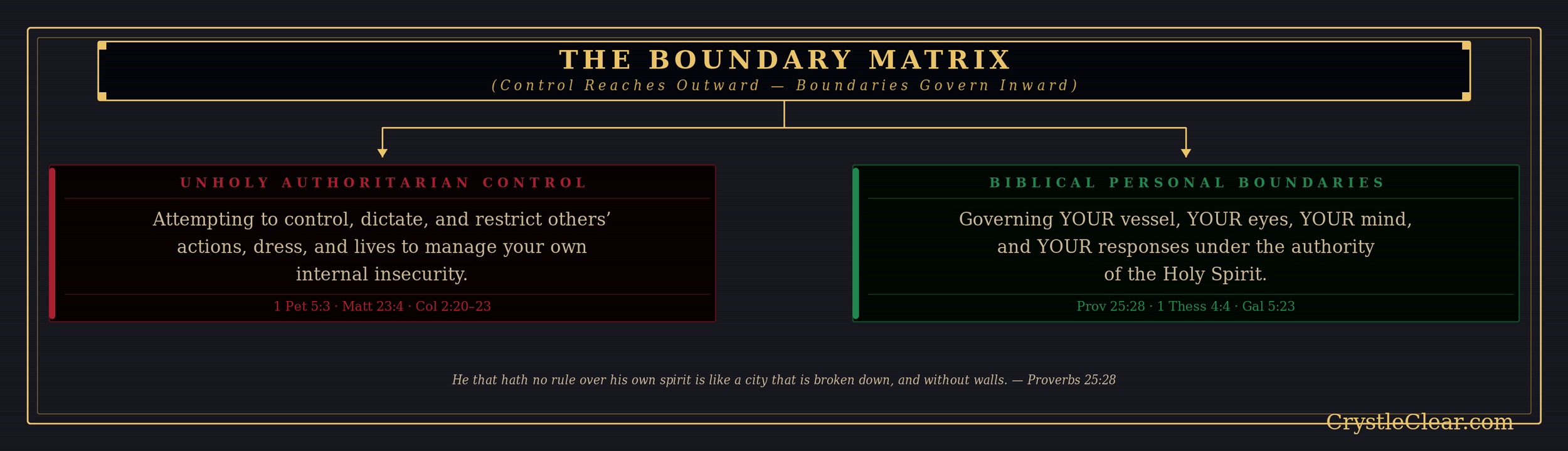
When you understand internal optics, you gain complete freedom from the false guilt imposed by other people's corrupted filters:
You Are Not Responsible for Someone Else's Perverse Optics: If you walk in modest, pure, and honorable intentions, and someone projects lust, malicious motives, or evil intent onto you, that is their legal docket, not yours. You are not obligated to take on condemnation for a fire burning in another person's hearth.
True Boundaries Govern Self, Not Others: Boundaries are not rules you enforce upon other people to force them to treat you right; boundaries are the legal lines you draw around your own vessel regarding what you will allow into your eye-gate, ear-gate, and personal space.
Refusing to Be Policed by the Defiled: Paul writes in 1 Corinthians 10:29, "For why is my liberty judged by another man’s conscience?" Do not allow defiled, hyper-critical, or projection-heavy religious spirits to police your God-given freedom in Christ.
Optical Cleansing: Restoring the Pure Filter Before Heaven’s Bench
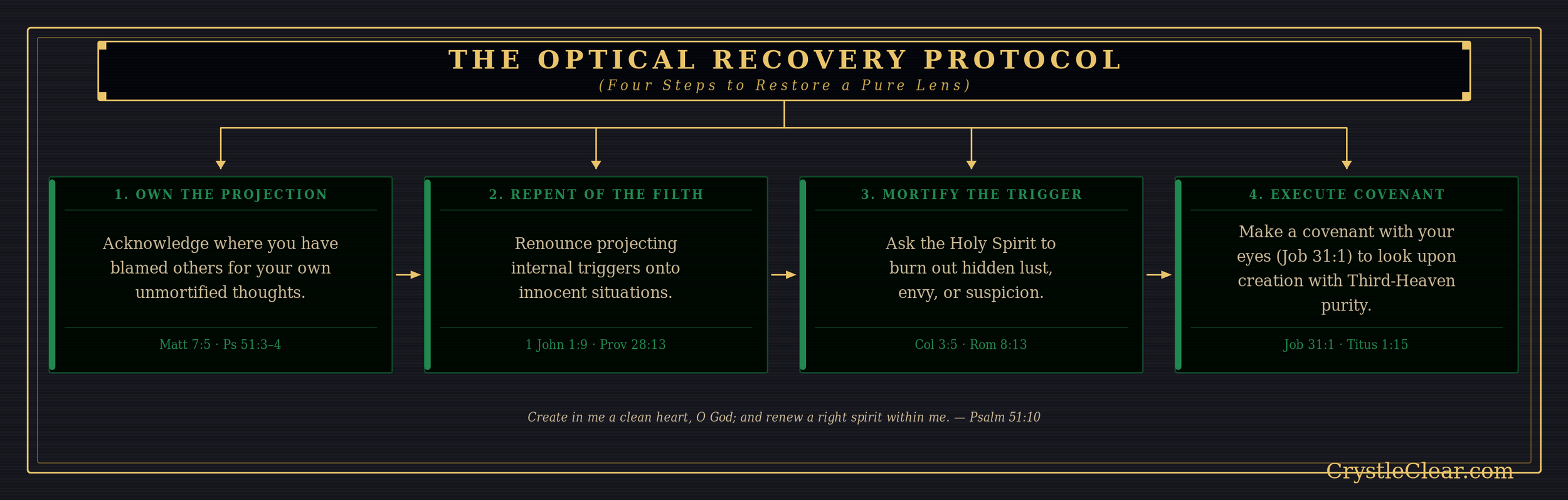
To walk in clean, High-Court judicial discernment, you must regularly bring your internal lens before the Holy Spirit for inspection and recalibration.
High-Court Cleansing Prayer:
"Supreme Judge of Heaven and Earth, I step into Your Courtroom under the covering of the Blood of Jesus.
I bring my internal optics before Your Bench today. I repent for every instance where I have operated through a defiled lens—where I projected my own unmortified lust, suspicion, envy, or bitterness onto innocent people and pure situations. I renounce the religious pride that demanded others alter their lives to accommodate my unaddressed internal triggers.
According to Titus 1:15, I ask You to purge my mind and conscience with the Blood of the Lamb. Wash my eye-gates and ear-gates clean. I make a covenant with my eyes today (Job 31:1) that I will not look upon another image-bearer through the lens of the flesh.
I receive Your Third-Heaven optics. Give me pure eyes to see as You see, pure hearts to judge as You judge, and clean hands to execute Kingdom governance. In Jesus' name, Amen."
Keywords: Titus 1:15 Internal Optics Spiritual Projection Personal Boundaries High-Court Jurisprudence Optical Cleansing Matthew 5:28 Perverse Filter Vessel Governance Courts of Heaven CrystleClear
#Titus115 #InternalOptics #PureToThePure #KingdomMechanics #PersonalBoundaries #HighCourtGovernance #CrystleClear #SpiritualJurisprudence #NoProjection #CleanHandsPureHeart #CourtsOfHeaven
Questions & Topics Answered in This Post
What does Titus 1:15 mean when it says "To the pure, all things are pure"?
Titus 1:15 establishes that spiritual perception is determined by the condition of the heart. A pure heart views reality through redemption, truth, and holiness, while a defiled heart projects its own hidden lust, suspicion, or perversion onto innocent situations, distorting everything it sees.
How do people project their internal impurity onto others in a church setting?
When individuals refuse to repent of secret lust, envy, or bitterness, the internal guilt creates severe friction. To escape conviction, they project their hidden sin onto others—accusing modest people of seduction, or generous people of pride—making their own internal struggle the fault of an external target.
Does Matthew 5:28-29 teach that we should blame others for our sexual temptation?
Absolutely not. Jesus explicitly commanded that if your eye causes you to sin, you must "pluck it out"—placing 100% of the responsibility for purity on the person viewing the temptation. Scripture never authorizes believers to force others to cater to or shield their unmortified internal triggers.
How do I know if I am projecting or if someone is actually operating in bad intent?
True spiritual discernment evaluates evidence objectively through the fruit of the Holy Spirit (Galatians 5:22–23) and High-Court legal facts. Projection is characterized by sudden emotional offense, paranoia, intrusive sexualized/cynical thoughts, and a desire to condemn rather than restore.
What is the difference between personal boundaries and authoritarian control?
Authoritarian control attempts to dictate, restrict, and police other people's actions, dress, and choices to manage your own internal insecurities. Biblical personal boundaries govern YOUR own vessel, YOUR eyes, YOUR mind, and what you choose to allow into your personal space.